impact overview
Impact Overview
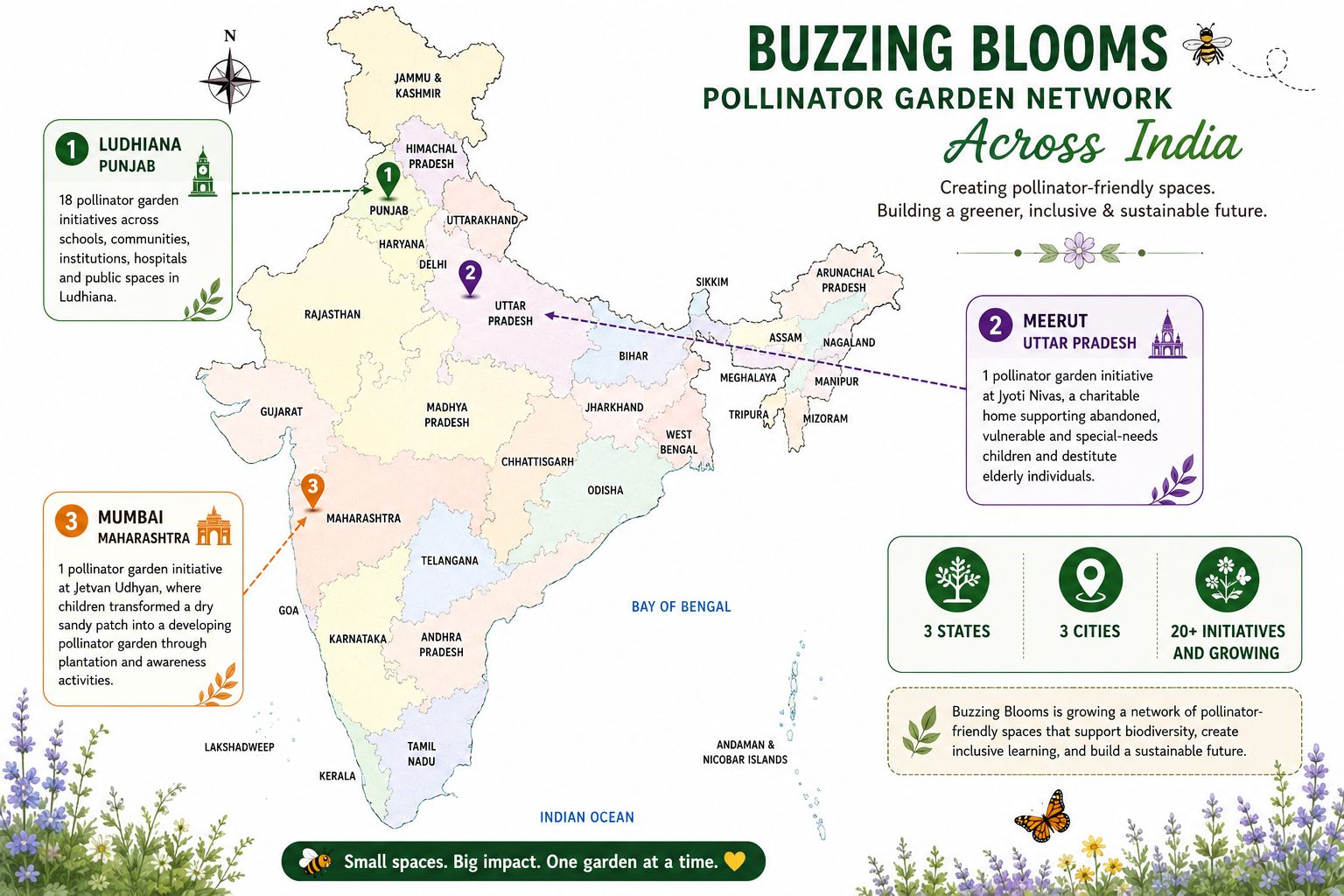
From a single backyard pollinator garden in March 2023 to a growing network of over 20 pollinator gardens and ecological initiatives across Ludhiana, Meerut, Mumbai and beyond, Buzzing Blooms has evolved into a youth-led movement focused on biodiversity conservation, environmental education and inclusive community engagement.
The initiative has transformed barren land patches, institutional spaces and neglected urban corners into thriving ecological learning environments where pollinators, people and communities grow together. Through workshops, plantation drives, therapeutic gardening sessions and ambassador-led initiatives, Buzzing Blooms has created meaningful ecological and social impact across diverse communities.
| Impact Area | Reach | |
| Pollinator Gardens & Ecological Initiatives Established | 20+ | |
| Students Engaged Through Workshops & Activities | 4,000+ | |
| Neurodivergent & Vulnerable Individuals Included | 250+ | |
| Total Individuals Impacted (directly and indirectly) | 8,000+ | |
| Cities Reached Through Ambassador Initiatives |
|
The 250+ neurodivergent and vulnerable individuals impacted include participants from Braille Bhawan (50), Sahyog Halfway Home (30), Observation Home (70), Home Away from Home (40), and 60+ neurodivergent children reached through inclusive workshops conducted across all partner schools.
8,000+ total individuals impacted reflects both direct participation in gardens and workshops, as well as indirect reach through families, caregivers, institutional staff, and community members engaged through large-scale restoration drives and awareness campaigns.
How Buzzing Blooms Creates Impact
Hands-On Ecological Stewardship
Buzzing Blooms encourages children and communities to actively participate in ecological restoration rather than simply learning about it theoretically. Participants prepare soil, plant native flowering species, build pollinator feeders, create water stations and take responsibility for maintaining the gardens.
At the Observation Home, residents were entrusted with individual sections of the garden to care for, helping develop responsibility, discipline and emotional connection with nature. Across schools and institutions, children became active environmental stewards through plantation drives, garden maintenance and biodiversity awareness activities.
These experiences transformed environmental awareness into sustained ecological stewardship, responsibility and action.
Inclusive & Therapeutic Green Spaces
Buzzing Blooms was designed to ensure that nature and environmental learning remain accessible to individuals of all abilities and backgrounds.
At Braille Bhawan, visually impaired students explored plants through touch, texture and fragrance while learning about pollinators through descriptive storytelling and sensory interaction.
At Sahyog Halfway Home, residents recovering from chronic mental illness participated in therapeutic gardening, flowerpot painting and nature-based activities that created calming, engaging and emotionally supportive environments.
The initiative has impacted over 250 neurodivergent and vulnerable individuals through inclusive ecological engagement, helping create spaces of belonging, participation and dignity.
Environmental Education & Youth Leadership
Buzzing Blooms expanded environmental awareness through workshops, awareness campaigns, plantation drives and hands-on ecological learning sessions conducted across schools and community spaces.
More than 4,000 students participated in activities focused on:
- Pollinator conservation
- Biodiversity awareness
- Sustainable gardening
- Native plant ecosystems
- Climate-conscious urban greening
Students actively participated in:
- Plantation drives
- Pollinator observation sessions
- Seed distribution activities
- Awareness campaigns
- Ecological workshops
- Garden care activities
Over time, many students evolved from participants into environmental leaders within their schools and communities.
Through the Buzzing Blooms Ambassador Network, students across cities independently initiated plantation drives, awareness campaigns and pollinator garden projects — multiplying the initiative beyond its original locations.
Community Restoration & Ecological Revitalisation
Buzzing Blooms demonstrated how small urban spaces can become thriving ecological habitats through collective community participation.
Community parks, institutional spaces, railway-side patches and neglected land areas were gradually transformed into biodiversity-supporting ecosystems using native flowering plants and sustainable gardening practices.
One of the largest restoration efforts took place during the revival of the Hambran Micro forest after a fire damaged the ecosystem. The initiative actively participated in plantation drives involving over 4,000 saplings to support ecological restoration and long-term biodiversity recovery.
Large-scale plantation drives also engaged underprivileged children, local residents, volunteers and educators — transforming environmental conservation into a shared community effort.
Why the Buzzing Blooms Model Works
Buzzing Blooms combines ecological restoration, experiential education and inclusive community engagement into a single replicable framework.
Rather than treating environmental conservation as a separate scientific activity, the initiative integrates biodiversity directly into schools, rehabilitation centres, neighbourhoods and public spaces — allowing communities to interact with nature within their everyday lives.
The model is intentionally:
- Youth-led
- Community-driven
- Low-cost
- Adaptable across institutions
- Scalable across cities
By combining environmental action with emotional connection and active participation, Buzzing Blooms creates ecosystems that are both ecologically sustainable and socially meaningful.
This approach has allowed the initiative to expand organically through ambassadors, partnerships and community participation, demonstrating how small urban interventions can collectively create large-scale ecological and social impact.