Case Studies
Case Study 1
From Barren Ground to a Place of Purpose
State Observation Home, Ludhiana
The Challenge
The outdoor space at the State Observation Home was a stretch of barren ground, underutilised and offering no avenue for environmental engagement or responsibility-building. The young residents themselves presented a deeper programmatic challenge: institutionalisation had rendered many of them withdrawn, mistrustful, and unapproachable. They were not merely disinterested in structured activity; they were actively resistant to connection. Any meaningful intervention would need first to overcome this wall of silence before a single seed could be planted. Access to the facility was additionally governed by strict age-restriction protocols, requiring formal partnership with an authorised NGO already operating inside to secure the necessary permissions and bridge institutional boundaries.
The Intervention
Recognising that conventional instruction would fail against a backdrop of deep mistrust, Buzzing Blooms adopted a non-directive, participation-first approach. It did not build a garden for the residents; it built one with them. No resident was lectured or coerced. Instead, the simple, tangible act of working with soil, seeds and water became the primary language of connection. In collaboration with the partner NGO, young residents were invited to participate directly planting native flowering species, constructing pollinator feeders and maintaining the site. Tasks were designed to be collaborative and immediately rewarding, slowly dismantling the culture of isolation by creating shared, non-verbal purpose. The model fostered active stewardship, transforming participants from passive, withdrawn observers into caretakers of a living ecosystem entrusted to their charge.
The Outcome
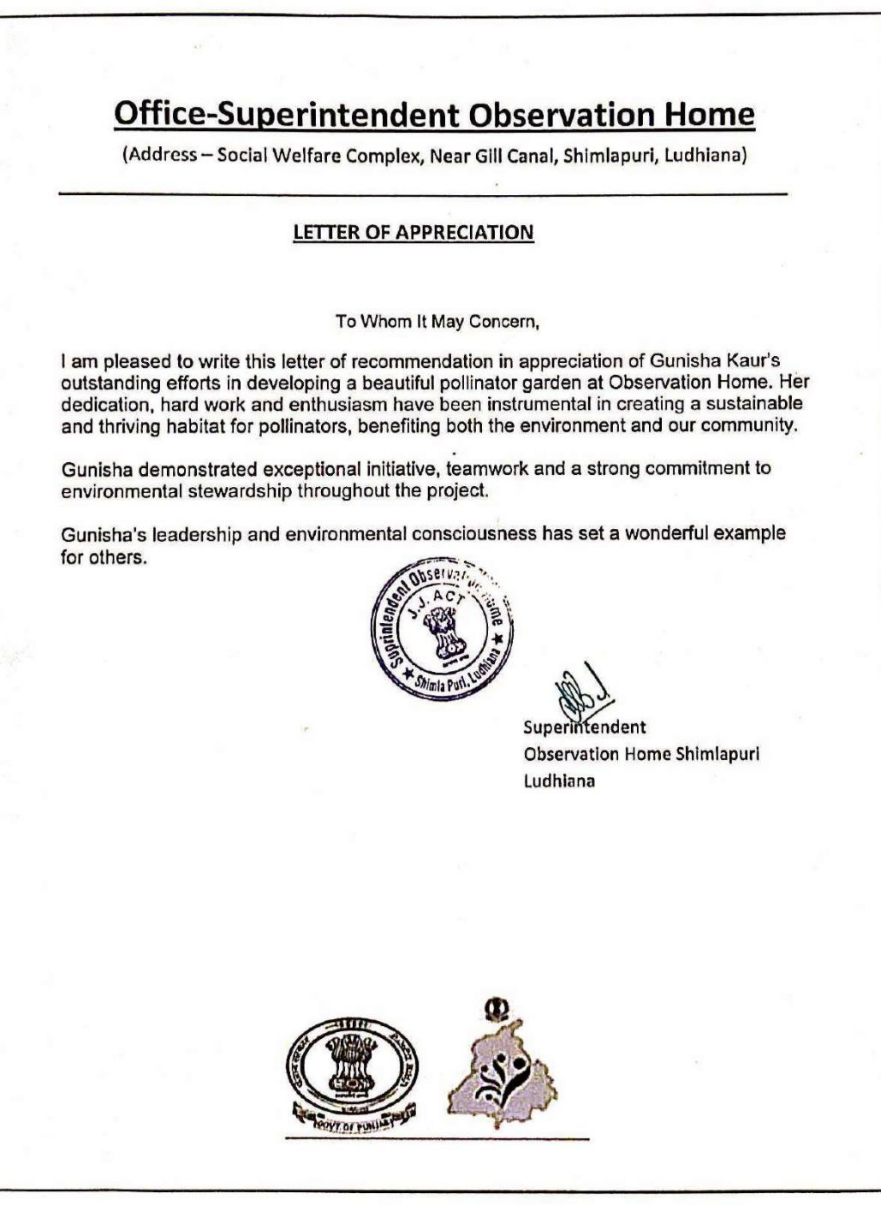
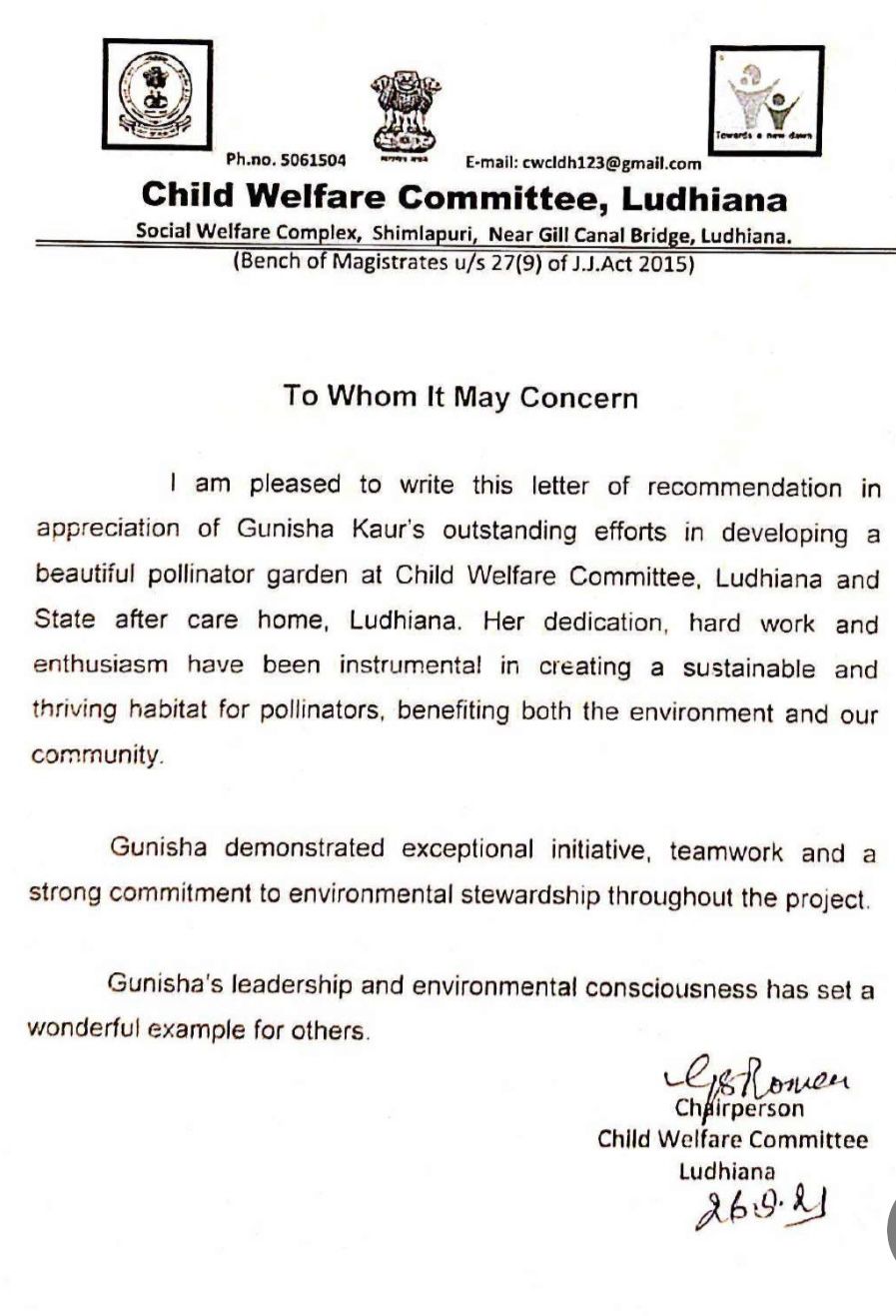
The garden did what words initially could not. As the first flowers bloomed, the wall of silence began to recede. Residents who had been unapproachable started assuming ownership of individual sections, diligently monitoring plant health and growth. The act of nurturing a living thing externalised a sense of responsibility they had been denied, and in its place, a quiet pride began to grow. The administration observed a marked increase in constructive outdoor engagement, personal accountability, and a demonstrable sense of purpose among the participants. Where there had been only withdrawal, there was now visible belonging. Recognising this dual impact on the environment and resident wellbeing, the Superintendent formally commended the initiative with a Letter of Appreciation.
Key Insight
When young individuals are entrusted with the care of living systems, a garden becomes a training ground for responsibility, a quiet source of resilience, and a place of genuine belonging. Crucially, for those hardened by institutional life, trust cannot be instructed, it must be cultivated. The soil proved a more effective bridge than any spoken word, transforming the simple act of planting into a profound lesson in purpose. The most critical outcome cultivated is often not a plant but the reclamation of a young person’s capacity to connect.
Case Study 2
Designing Nature for Inclusion and Wellbeing
Braille Bhawan, Sahyog Halfway Home & Home Away from Home
The Challenge
Vulnerable and differently abled individuals face systemic barriers to meaningful engagement with nature. Programmes and environments are rarely designed with their specific sensory needs, cognitive capacities or emotional realities in mind, leading to exclusion. Initial institutional access required navigating formal protocols and partnering with an established Philanthropy Club. Despite being equipped with internships and specialised coursework , techniques to engage children, including neurodivergent children, in nature-based learning was unpredictable. Every child responded differently engaging neurodivergent children demanded specialised techniques and the integrated, on-site guidance of a qualified special educator to ensure therapeutic rigour and emotional safety.
The Intervention
Buzzing Blooms designed distinct, multisensory and therapeutic interventions tailored to each community, implemented in collaboration with the Philanthropy Club and under the guidance of a special education professional:
- At Braille Bhawan – Government Institute for Blind: Students explored biodiversity through touch, fragrance, texture and narrative. Sensory walks and aromatic gardens replaced visual dependency with immersive, accessible experiences.
- At Sahyog Halfway Home: Residents recovering from chronic mental illness engaged in structured therapeutic gardening. The act of painting flowerpots as personal canvases, followed by planting, introduced a quiet rhythm of purpose and self-expression.
- At Home Away from Home orphanage: Children in residential care planted and nurtured their own saplings. The daily ritual of care transformed the garden into a constant, living presence, an extension of their emotional world and a source of unconditional stability.
The Outcome
Structured sessions evolved into self-sustaining spaces of healing and belonging. At Braille Bhawan, students built a vocabulary of nature through scent and touch. At Sahyog, the garden became a gallery of personal stories, tended by hands relearning how to care. At the children’s home, residents formed deep emotional bonds with their plants, creating a surrogate family structure rooted in daily nurture. The initiative received formal recognition from the Child Welfare Committee for creating supportive green environments that demonstrably enriched lives.
Key Insight
True inclusion is not achieved by simply opening a gate. It requires designing participation into the very architecture of the experience, ensuring every individual, regardless of ability, can contribute, connect, and thrive. For interventions involving neurodivergent populations, integrated professional expertise is not optional it is a core delivery requirement that ensures the work is both safe and effective.
Case Study 3
Bridging the Gap from Awareness to Action
Millennium World School, Ludhiana
The Challenge
Conventional environmental education often remains theoretical, failing to translate classroom knowledge into sustained, hands-on behavioural change. Initial workshops, while well-received, revealed through follow-up monitoring a critical implementation gap: awareness had been successfully raised but it had not converted into action. The model required a redesign to bridge this knowing-doing divide.
The Intervention and Strategic Pivot
On World Bee Day, Buzzing Blooms conducted workshops for over 500 students. Recognising the gap between awareness and action, the model was immediately redesigned with a structured, incentive-based framework:
- A tangible goal and reward system was introduced for creating home pollinator gardens.
- A clear, step-by-step guidebook was distributed.
- A formal competition, in partnership with the school, invited students to document their gardens.
- To embed inclusion, the scoring rubric awarded additional points for involving neurodivergent peers, actively incentivising peer-to-peer integration.
The Outcome
The redesign transformed passive learners into active environmental stewards. Students who had been disengaged began creating pollinator spaces at home with demonstrable pride. The initiative was formally recognised with a Certificate of Appreciation from the school’s Director. Most significantly, the inclusive framework empowered a neurodivergent student to emerge as Buzzing Blooms’ first Neurodivergent Ambassador, demonstrating that when inclusion is structurally incentivised, neurodivergent individuals do not merely participate—they lead.
Key Insight
Awareness is necessary but insufficient. Environmental education must engineer a bridge between knowing and doing, using structure, incentive, and accountability. When motivation is designed into the system and inclusion is actively rewarded, young people rise to meet expectations, and unexpected leaders emerge from the spaces made for them.

Case Study 4
Planting Hope After the Floods
The Green Recovery Kit Initiative, Punjab
The Challenge
In August 2025, severe flooding across Punjab caused widespread environmental damage and deep emotional distress. Many children withdrew into their homes and families, still in trauma were resistant to engagement. Standard outreach proved ineffective, necessitating a direct, door-to-door mobilisation strategy led by Buzzing Blooms Ambassadors to personally encourage families to step out and participate.
The Intervention
Buzzing Blooms launched the Green Recovery Kit Initiative, combining psychological first aid with environmental action. Ambassadors went door to door, distributing kits that included pollinator seeds, potted plants, Buzzing Bloom books, art materials and stress relief toys. The act of planting together was used as a deliberate tool to rebuild connection and nurture resilience.
The Outcome
The initiative successfully drew children and families out of isolation, providing a constructive, nurturing focus during a period of profound disruption. A deep emotional connection was forged, epitomised by a young girl who declared she would protect her plant “like a doll.” The intervention evolved from immediate relief into an enduring symbol of hope and renewal, demonstrating that ecological restoration can be a powerful modality for post-trauma recovery.
Key Insight
Environmental restoration and emotional recovery are not separate endeavours. When deployed strategically, the former becomes a potent vehicle for the latter. Direct, person-to-person engagement is essential to overcome the inertia of trauma and rebuild both landscapes and collective hope.
Case Study 5
A Community That Chose to Bloom
Dugri Community Pollinator Garden, Ludhiana
The Challenge
An existing community park in Dugri remained underutilised, offering minimal ecological value. While the Municipal Corporation maintained the basic infrastructure, there was no pollinator habitat or community engagement around environmental stewardship. Residents showed passive goodwill but were reluctant to participate actively. Community ownership could not emerge spontaneously, it had to be cultivated.
The Intervention
It was founder’s first community engagement. She collaborated directly with the Municipal Corporation, Ludhiana, to convert a section of the existing community park into a dedicated pollinator garden. She conducted a detailed assessment of the site and provided the Corporation with specific insights and requirements—native plant species, water sources for pollinators, host plants for butterflies and staggered flowering cycles for year-round forage.
Parallelly, she along with her friends launched a door-to-door mobilisation drive. Residents were hesitant, so they personally visited each home, explained the benefits of pollinator gardens and gently encouraged them to participate in planting and maintenance. She assigned small, manageable tasks to build confidence and ownership.
The Outcome
The Municipal Corporation approved her recommendations and supported the development of the pollinator garden within the existing park. As native plants flourished, biodiversity increased visibly—bees, butterflies and other pollinators returned. Children began identifying species, families joined plantation drives and previously reluctant residents became autonomous caretakers of the space.
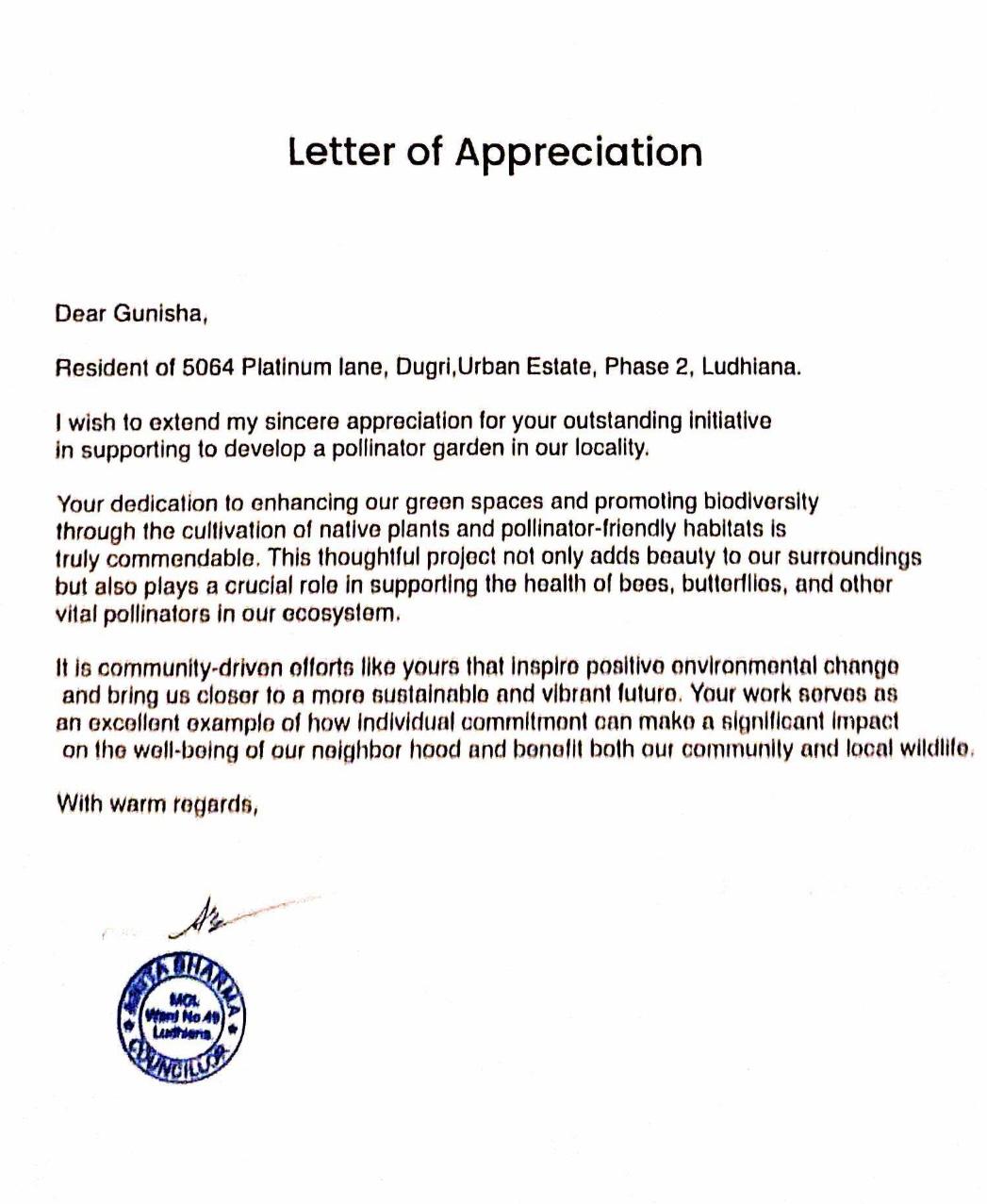
The Municipal Corporation formally recognised the transformation with a Letter of Appreciation, commending our initiative in supporting the pollinator garden and highlighting how community-driven efforts inspire positive environmental change.
Key Insight
Collaboration with the Municipal Corporation provided the structural support—land, permissions, and resources. However, lasting ecological restoration required cultivating community ownership from the ground up, one doorstep at a time. Technical insights must be paired with persistent, personal engagement to turn reluctant residents into active stewards.
A Common Thread: The Interconnected Model
Planting Hope After the Floods
A single pattern emerges across every intervention: the most meaningful metric is not merely the number of flowers planted. It is the children who become environmental leaders, the residents who discover purpose through stewardship, the communities that reconnect with nature and the individuals who find belonging in spaces designed for everyone.
The Buzzing Blooms model proves that biodiversity conservation, social inclusion, and community wellbeing are not separate goals—they are interconnected, mutually reinforcing outcomes. When individuals are empowered to care for nature, they strengthen their connection to one another. Every garden becomes more than a habitat for pollinators; it becomes a node where learning, resilience, and hope take root.
A Self-Sustained, Scalable Funding Model
Buzzing Blooms is a fiscally prudent, self-sustaining initiative, run without reliance on large grants or external sponsors. Its financial backbone is the revenue from weekend art classes, which are directly and fully reinvested into garden materials: native seeds, soil, tools, saplings and maintenance. Academic scholarships are directed toward expanding plantation drives. At community fairs, revenue is generated from the sale of potted plants, self-authored educational books and produce harvested from our own gardens—fruits, herbs and saplings nurtured entirely by hand. This closed-loop, zero-waste financial model ensures that every rupee earned is ploughed back into the mission.
The Full Circle
Inside the State Observation Home in Shimlapuri, a pollinator garden was created in 2024. Months later, when a health check-up camp was held for the children, the nutrition distributed came from that very same mission. We provided nearly 500 organic bananas, harvested not from an external source, but from the pollinator gardens grown across Ludhiana—gardens funded entirely by art classes, scholarships and fair stalls. This is a concrete demonstration of a model where social, ecological, and economic resources circulate within the community to generate health, wellbeing, and lasting impact.